Sign In | Join Free | My insurersguide.com
China Kaff Rees (Changzhou) High-tech Co., Ltd. logo
Kaff Rees (Changzhou) High-tech Co., Ltd.
We are a leading company integrating porduction,research,and marketing with service.Furthermore,our company provides overseas corporations with OEM(white label) service in addition to stable and long
Verified Supplier

1 Years

Home > Pipe Insulation Auxiliary Materials >

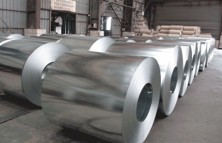
Corrosion Resistant Stainless Steel Cladding Material For Pipeline Cold Insulation

Kaff Rees (Changzhou) High-tech Co., Ltd.
Trust Seal
Verified Supplier
Credit Check
Supplier Assessment
Contact Now

Corrosion Resistant Stainless Steel Cladding Material For Pipeline Cold Insulation

Brand Name : JSHESOL

Certification : SGS

Place of Origin : Changzhou, Jiangsu,China

MOQ : 20 Cubic Meters

Price : Negotiable

Payment Terms : EXW/FOB/CIF

Supply Ability : According to products

Delivery Time : Negotiable

Packaging Details : Carton packaging/Wooden case packaging/according to the requirements

Chemical Resistance : Resistant to most acids, alkalis, and solvents

Length : 6 feet

Fire Rating : Class A

Thickness : 1/2 inch, 1 inch, 2 inch

Temperature Range : -40°F to 850°F

Material : Fiberglass

Compressive Strength : 25 psi

Application : Suitable for use in hot and cold water pipes, steam pipes, and air ducts

Color : White

Tensile Strength : 50 psi

Density : 2.5 lbs/ft³

Size : 1 inch, 2 inch, 3 inch

Water Vapor Permeability : 0.02 perm-in

Flexural Strength : 50 psi

Contact Now

Stainless steel metal layer is primarily used as a protective material in pipeline cold insulation engineering. Its application needs to be combined with thermal insulation materials, moisture-proof treatment, and construction specifications to achieve efficient cold insulation, corrosion resistance, and structural stability. The following are specific application points and technical requirements:I. Function and Selection of Stainless Steel Metal LayerProtective Layer FunctionsStainless steel metal layer (such as 0.5mm thick stainless steel plate) is used to wrap cold insulation materials, with main functions including:
  1. Mechanical protection: Prevents damage to the cold insulation layer from external impacts and friction.
  2. Moisture-proof and corrosion resistance: Blocks water vapor penetration to prevent cold insulation materials from moisture failure, while resisting chloride ion corrosion in coastal or chemical environments.
  3. Sealing: Forms a continuous protective layer through lap or bite joints to reduce cold loss.
    Applicable Scenarios
  4. Low-temperature pipelines: Such as LNG pipelines and chilled water systems, need to withstand extreme temperature differences from -180°C to ambient temperature.
  5. Highly corrosive environments: Chemical plants, coastal areas, where stainless steel's resistance to chloride ion corrosion is significantly better than ordinary carbon steel.
    II. Cold Insulation System Structure Design
    Material Combination
  6. Thermal insulation layer: Commonly uses polyurethane foam (PIR/FIR), foam glass (FG), nitrile rubber foam, etc., which need to meet the requirements of low thermal conductivity and high compressive strength.
  7. Moisture-proof layer: Uses bitumen mastic or waterproof mortar, 5mm thick, to prevent condensate from penetrating into the cold insulation layer.
  8. Protective layer: Stainless steel plates are fixed through embossing, lapping (overlap of 30-50mm) or embedded joints, with additional sealing tape required for high-temperature pipelines.
    Key Construction Specifications
  9. Joint treatment: Longitudinal joints should be embossed and lapped, while circumferential joints use bite or plug joints, avoiding the use of nail-type fasteners that may damage the moisture-proof layer.
  10. Fixing methods: Cold insulation structures use metal hoops for fixing (spacing 250-300mm), while thermal insulation structures can use self-tapping screws (spacing 150-200mm).
  11. Special parts treatment: The lap length between elbows and straight pipes needs to be adjusted according to the outer diameter, with large-diameter elbows requiring sectional processing. Tees are fixed with flanging to ensure smooth water lap.
    III. Corrosion and Moisture-proof Measures
    Metal Surface Treatment
    Stainless steel protective layers need to be pre-coated with phosphating primer or epoxy coating to enhance adhesion to cold insulation materials and prevent pitting caused by interface hydrolysis.
    Avoid using chloride-containing sealing materials (such as neoprene adhesive) to prevent stress corrosion cracking.
    Moisture-proof Layer Construction
    A waterproof mortar or glass fiber cloth needs to be applied outside the cold insulation layer to form a closed barrier, preventing moisture intrusion that may lead to material performance degradation.
    Sealing tape should be added to joints of pipelines in humid environments or outdoors to ensure no leakage.
    IV. Construction Precautions
    Environmental Adaptability
  12. Extremely cold regions (such as -30°C) require low-temperature resistant stainless steel (such as 316L) and increased thermal insulation layer thickness.
  13. Dynamic stress areas (such as valves, elbows) should use elastic cold insulation materials (nitrile rubber foam) to reduce the risk of deformation and cracking.
    Quality Control
  14. Cold insulation layer thickness deviation should not exceed ±5%, with surface flatness checked by a 2m straightedge allowing a gap ≤3mm.
  15. After completion, vacuum testing (for vacuum insulation layers) and refrigerant penetration tests are required.
    V. Typical Case References
  16. LNG pipeline cold insulation: Uses polyurethane foam + stainless steel protective layer structure, with outer stainless steel plates staggered and lapped, combined with gas barrier layers to reduce thermal bridge effects.
  17. Food industry refrigerant pipes: Inner layer is foam glass, with outer stainless steel protective layer, ensuring hygiene standards and long-term corrosion resistance.
    Through the above technical integration, stainless steel metal layers can achieve long-term thermal insulation, corrosion resistance, and structural stability in pipeline cold insulation, suitable for low-temperature pipeline systems in various fields including chemicals, energy, and food industries. Specific construction must strictly follow the "Industrial Equipment and Pipeline Thermal Insulation Engineering Construction Specification" (GB 50126) and project design requirements.

Product Tags:

Pipeline Cold Insulation Steel Cladding


Corrosion Resistant Pipe Insulation Cladding

      
Cheap Corrosion Resistant Stainless Steel Cladding Material For Pipeline Cold Insulation for sale

Corrosion Resistant Stainless Steel Cladding Material For Pipeline Cold Insulation Images

Inquiry Cart 0
Send your message to this supplier
 
*From:
*To: Kaff Rees (Changzhou) High-tech Co., Ltd.
*Subject:
*Message:
Characters Remaining: (0/3000)